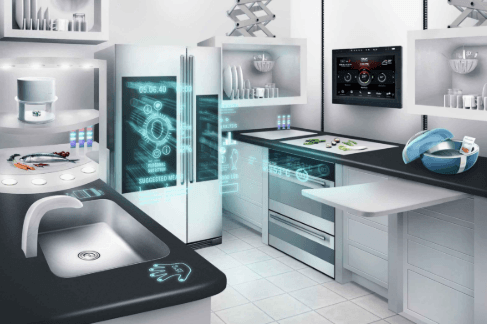
Smart kitchens integrate sensors, devices, and cloud platforms through standardized protocols to enable data exchange and automated workflows. Devices generate actionable insights on activity, energy use, and inventory. The result is targeted improvements in time efficiency, safety, and waste reduction. Ecosystem choice hinges on interoperability, security, and data standards, while governance practices address privacy and firmware updates. A metrics-driven approach supports transparency and continuous optimization, leaving stakeholders with unresolved trade-offs that warrant further assessment.
How Smart Kitchens Work: From Devices to Data
Smart kitchens integrate devices through standardized communication protocols and cloud-based services, enabling seamless data exchange among sensors, appliances, and control hubs.
Devices synchronize via sensor networks, consolidating inputs from smart ovens, smart faucets, and energy monitoring systems.
Data governance ensures privacy and integrity while voice control and automation optimize workflows.
The architecture supports scalable analytics, adaptive retrofit, and user freedom in configurations.
Benefits of Connected Cooking: Time, Safety, and Waste Reduction
Connected cooking yields measurable gains in time efficiency, safety, and waste reduction.
Data indicate faster task completion through automated timing, synchronized steps, and predictive alerts.
Safety improvements arise from real-time monitoring and fault detection, reducing burn risk and mishaps.
Waste reduction results from precise portioning and materials tracking.
Choosing the Right Ecosystem: Appliances, Apps, and Platforms
Choosing the right ecosystem for smart kitchens requires evaluating how appliances, apps, and platforms interoperate, prioritizing compatibility, data standards, and security.
Selecting ecosystems hinges on robust appliance integration, seamless app compatibility, and clear platform standards.
Data interoperability guides cross-device workflows, while well-defined user profiles support personalized automation, access controls, and privacy preferences, enabling flexible configurations without vendor lock-in.
Best Practices and Troubleshooting: Privacy, Security, and Maintenance
In smart kitchens, privacy, security, and maintenance require a structured approach grounded in data-driven practices and verifiable metrics. The analysis emphasizes documented privacy audits, continuous firmware maintenance, proactive security patching, and formal data governance. Teams measure exposure, track remediation timelines, validate configuration baselines, and enforce accountability. Transparent reporting supports autonomy while reducing risk across devices, networks, and interconnected cooking platforms.
See also: adescareonline
Frequently Asked Questions
Can Smart Kitchens Integrate With Non-Smart Traditional Appliances?
Smart kitchens can integrate with non-smart traditional appliances, though results vary. The analysis shows limited non smart compatibility, with retrofit feasibility depending on available interfaces, power requirements, and protocol adapters, enabling selective automation while maintaining user autonomy and safety.
How Do I Budget for a Complete Smart Kitchen Overhaul?
A structured approach outlines budget planning for a complete smart kitchen overhaul, prioritizing phased investments and contingencies; it emphasizes appliance integration metrics, ROI projections, energy savings, and interoperability, enabling informed decisions while preserving culinary autonomy and flexible upgrade paths.
What Data Do Smart Devices Collect Beyond Cooking Habits?
Smart devices collect data beyond cooking habits, including usage patterns, appliance status, temperatures, location, and voice interactions; this raises data privacy concerns. AI personalization leverages these datasets, enabling tailored experiences while demanding robust consent, transparency, and user autonomy for freedom-seeking users.
Do Smart Kitchen Devices Require Continuous Cloud Connectivity?
Yes, smart kitchen devices often require intermittent cloud connectivity rather than constant dependence, though some functions operate locally. A sensor’s outage illustrates dependency: data ownership and control shift when cloud access is needed for analytics, updates, and commands.
How Can I Retrofit a Kitchen Without Extensive Wiring Changes?
Retrofit options exist that minimize disruption, leveraging wireless installation and plug-and-play modules. The approach emphasizes modular sensors, battery power where possible, standardized protocols, and scalable hubs; data-driven evaluation guides selection, balancing freedom with secure, low-impact integration.
Conclusion
Smart kitchens integrate sensors, devices, and cloud platforms to optimize real-time monitoring and automation across appliances. Data-driven metrics track time savings, safety incidents, and waste reduction, enabling continuous improvement and transparent reporting. Interoperability and robust security standards underpin reliable operation, while governance practices mitigate privacy and firmware risk. Choosing ecosystems with open standards and clear data ownership accelerates deployment. In sum, a mature, privacy-conscious approach delivers measurable efficiency gains, balancing innovation with accountability and maintenance to stay ahead of disruption. A stitch in time saves nine.